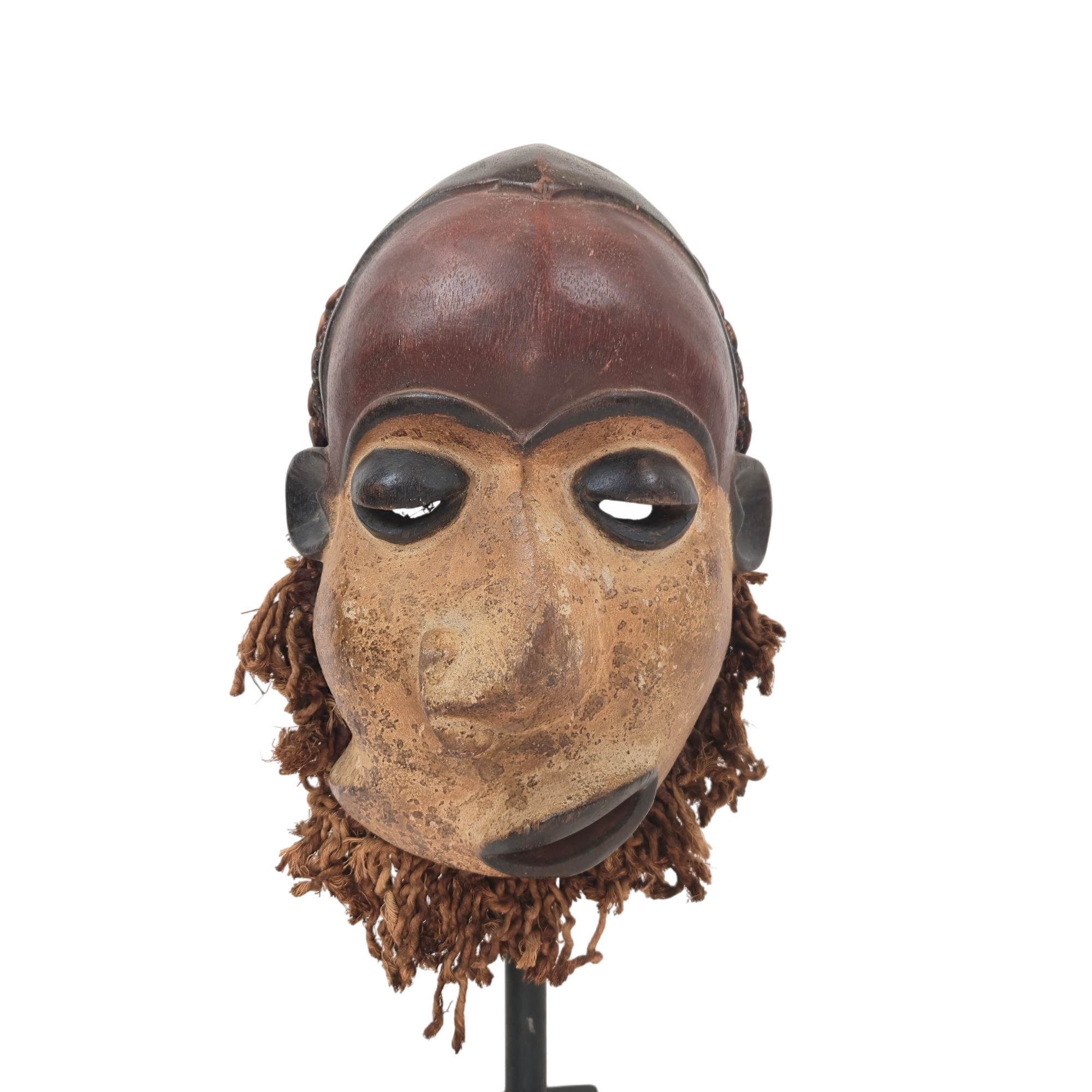
Description
The Pende people live in southwestern Democratic Republic of Congo, mainly in the Kwilu and Kwango regions. Known for their expressive masks, ritual theatre and deep social symbolism, the Pende are one of Central Africa’s most important artistic cultures.
Social structure
Pende society is organized around clans and lineages, with authority held by:
• lineage chiefs
• councils of elders
• male and female initiation associations
Initiation rites mark the transition to adulthood and provide access to knowledge, responsibility and social integration.
Art and aesthetics
Pende art is internationally recognized for its masks with strong visual impact. Their features include:
• narrow, intense eyes
• asymmetric mouths
• geometric volumes
• a distinctive sense of movement and expression
Mask categories include:
• Mbangu masks (illness and duality)
• Mbuya masks (social theatre)
• Giwoyo masks (graceful dance masks)
• Power masks linked to male rituals
In addition to masks, Pende art encompasses:
• ancestral figures
• protective charms
• ceremonial staffs
• raffia and fiber costumes
Rituals and symbolism
Ritual theatre, called Mbuya, is central to Pende culture. Masks personify characters from village life: chiefs, foreigners, warriors, tricksters, the sick man, the young girl, and more.
Each performance is a moral or social lesson, expressed through satire, dance and dramatic movement.
The iconic Mbangu mask, representing a face split between health and deformity, symbolizes:
• human fragility
• destiny and misfortune
• sorcery
• the balance between order and disorder.
Choose by product category
or by ethnies